Reading the Doing
On loving a man whose tenderness lives in his hands

For the first several years of my marriage, I was waiting for a letter that never came.
I am a writer. Words are my whole country. I tell stories on stages, I build sentences in my sleep. I have been known to feel something real about a well-placed semicolon. So naturally I married a man who treats words the way the rest of us treat the good dishes, rarely, carefully, and only when the occasion truly calls for it.
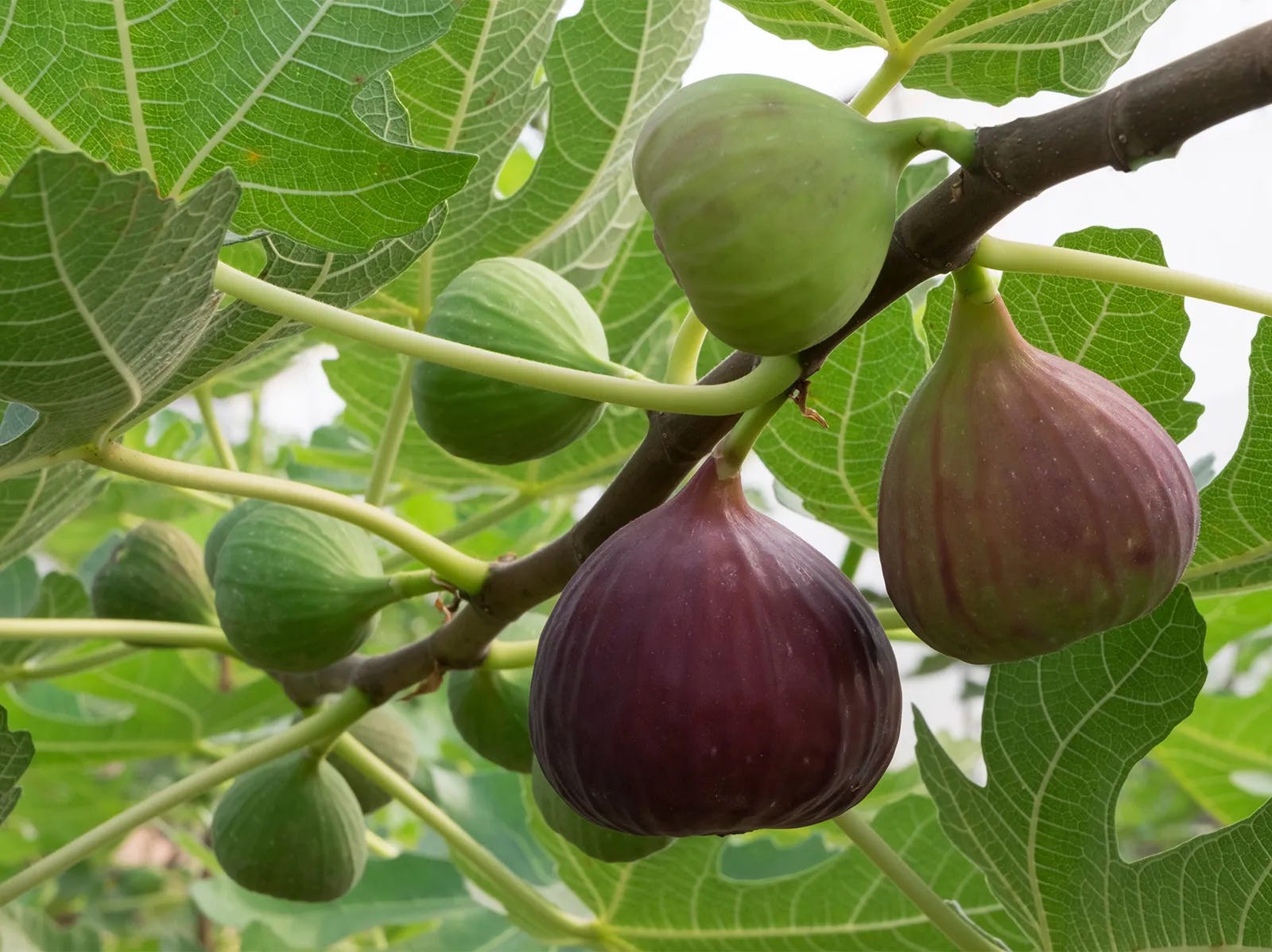
I wanted the declaration, the paragraph, the here is what you are to me, ideally with footnotes. What I got instead was a weeded and well-kept urban farm in our backyard.
Reader, it took me an embarrassing number of years to understand that the weeded garden bed was the paragraph.
My husband loves in a language I had to learn the way you learn any second tongue, slowly, badly at first, mostly by paying attention. He goes out into the Phoenix heat, which is not a climate that loves anybody back, and he coaxes things out of the ground anyway. He comes inside with his hands full. He cooks Ghanaian food that takes half a day and asks for no audience and no applause; he just sets it in front of the people he loves and watches them eat. His tenderness lives almost entirely in his hands.
He was fluent. I was illiterate.
I kept waiting for him to say it, the way I would have said it. And the whole time he was saying it constantly: in soil, in stew, in the small unglamorous maintenance of a shared life. He was writing me letters daily. I just couldn’t read the handwriting.
So I had to ask myself where I learned to expect love to announce itself.
Some of it is just being a words person, married to a doing person, and assuming my currency was the only real money in the transactions of our relationship. But a lot of it, I think, is the air we all breathe now. We’ve been taught that love should be legible out loud, in public, ideally with a caption and a carousel. We post the anniversary and perform the devotion for an audience that will scroll past it in 2.5 seconds. The loudest love gets the most engagement, and somewhere along the way a lot of us started mistaking the engagement for the love.
And we keep getting handed these tidy little frameworks that promise to sort love into a few neat boxes, like it’s a personality quiz with a marketing budget. I’ve never trusted them. Real love has never once fit in a box for me. It’s a mosaic, a thousand small, mismatched, often jagged tiles, and you don’t get to choose which ones your person hands you. You only get to decide whether you’ll learn to see the picture they’re making.
Mohammed’s tiles are made of things that don’t photograph well. A full gas tank. A thing repaired before I knew it was broken. A bowl of palm nut soup set down with no comment. That is not a love language. That is a man laying his life down in increments so small most people would miss them entirely.
There’s something from my faith that I keep circling back to here as I write this.
When the Prophet, peace be upon him, was asked what he did inside his own home, this man, the greatest of all the human beings who have ever lived, said the answer was that he was in the service of his household. He mended. He helped. He did the doing.
Sit with that for a second. The fullest human life we have been given as a model was not a man who announced his love. He was a man who *served* it. In my path, love was never meant to be a performance you stage for onlookers. It’s a practice you keep, quiet, daily, and mostly unwitnessed. It is a service offered up to God as much as to the person in front of you. The garden is a kind of prayer. The four-hour stew is a kind of prayer. My husband has been praying out loud this entire time. I was just the one who couldn’t hear it.
Here is the part I’m least proud of and most grateful for: learning to read his language eventually taught me to speak a little of it.
I am never going to be a woman who willingly prunes trees or weeds a garden in triple digit heat. We should all be honest about our gifts. But I have learned to stop waiting to be loved in my native tongue and start receiving the love that’s actually on offer and, sometimes, to offer some back in his. To do the thing instead of narrate the thing. For a verbal woman, this is a genuine spiritual discipline. It is so much easier for me to say “I appreciate you” than to quietly handle the task he’d been dreading. Words are cheap for me. The doing costs me something. Which is, I suspect, exactly why it counts.
I have daughters. And because I have daughters, I think hard about what I want them to look for and what I want them to refuse to be impressed by.
I want them able to tell the difference between a man who says beautiful things and a man who does quiet ones. The world will offer them plenty of the first kind; the first kind is intoxicating and cheap. I want my girls fluent in the second language. I am teaching them to be able to read a person by their doing, never dazzled into mistaking a good caption for a good man.
And I have sons. So I think just as hard about raising men whose love will be legible in their hands. Men who will know that the dishes are devotion, that showing up is a complete sentence, that you can say the most enormous things in life without once opening your mouth.
So this is my correction to my younger self, the one still checking the mailbox for a letter:
It came. It comes every single day. It’s simply not written where you’ve been looking. Lift your eyes from the page and look at the farm. Look at the plate. Look at his hands.
That’s the letter. He’s been writing it out this whole time.
“Real love has never once fit in a box for me. It’s a mosaic, a thousand small, mismatched, often jagged tiles, and you don’t get to choose which ones your person hands you.”
beautiful. i’m not married yet but fortunate to experience love in so many ways from so many different people. thank you for the reminder to pay attention to the languages that aren’t my own.
I love this! So well writtem.